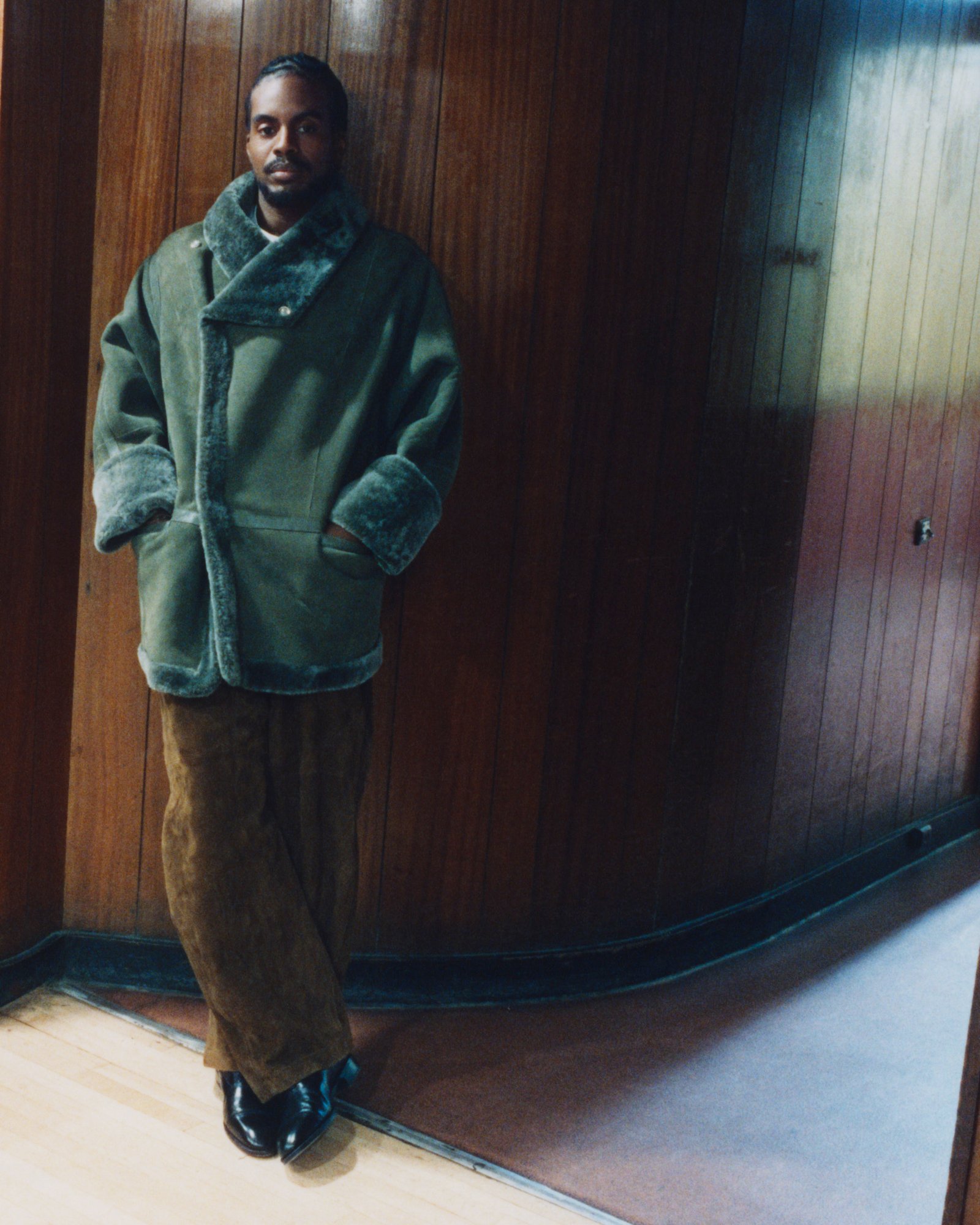
Theaster Gates Reconfigures The World
For two decades, the Chicago native has expanded the category of the artist, moulding and recombining raw matter in service of his people.
Read the full story in Justsmile Issue 7, What We Carry Forward.
Photography Donavon Smallwood
Styling Kevin Hunter
Text Jasmine Sanders
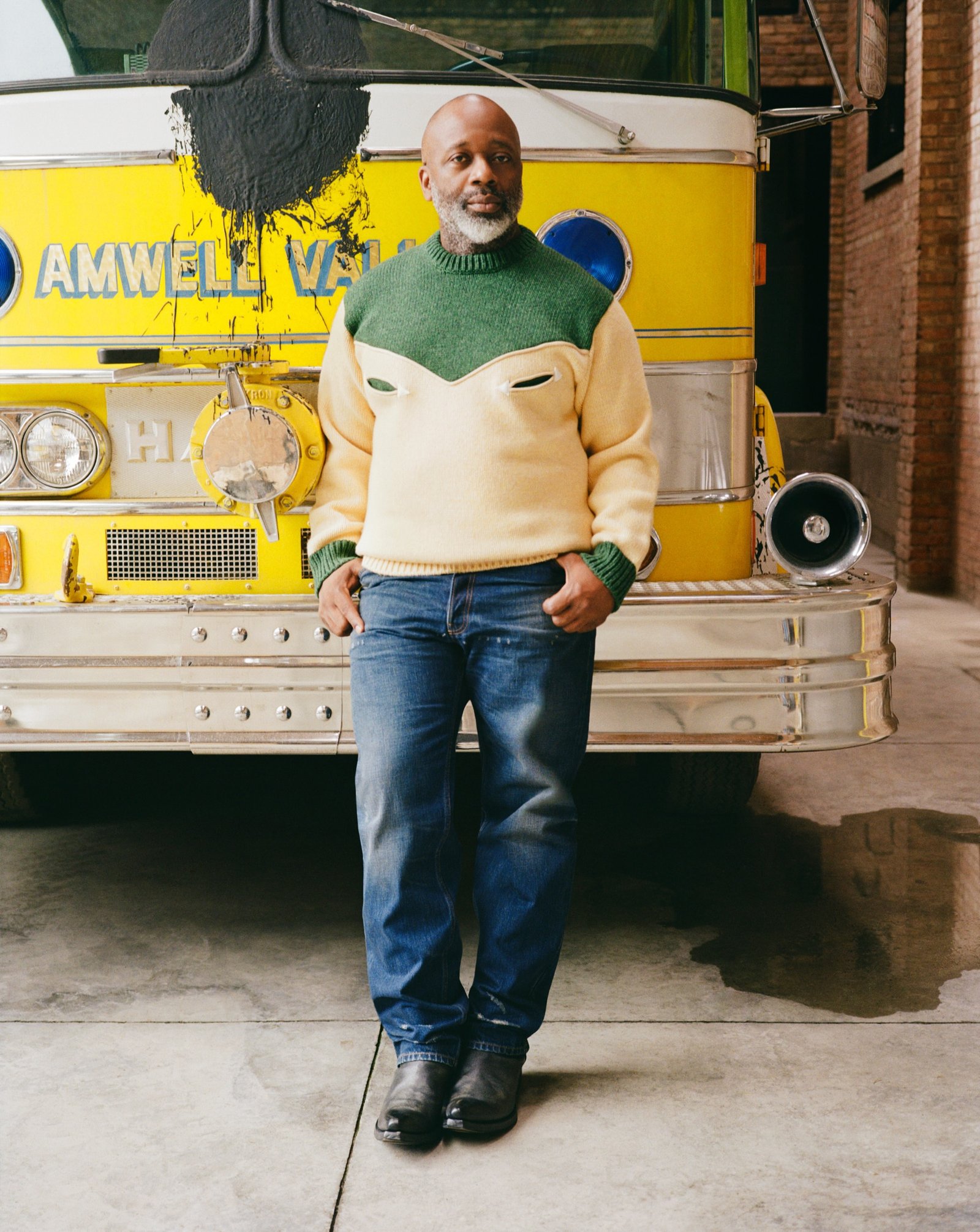
Theaster wears sweater, jeans and boots PRADA.
A woman, remarkable first because she is beautiful, second because she is Eartha Kitt, rests her exquisite face in one hand, clutching an income tax brochure with the other. In reading, her gaze is averted, denying the viewer the pleasure of recognition. She offers, instead, other delights: keen cheekbones, brows whetted to a point, those ardently feline eyes. Certain ethnic features are subdued—the hair cropped and straight, skin just dark (or light) enough to titillate, the nose elegantly round—buffing away any racial anxieties. In 1968, Kitt stoked similar anxieties at a White House women’s luncheon, where she advocated against the Vietnam War and for the urban poor to the offense of Lady Bird Johnson. Recorded in Kitt’s official CIA dossier, Lady Bird stated of the occurrence: “Only the shrill voice of anger and discord was heard.” Thereafter, the American government intensified its surveillance of Kitt, complete with a tapped phone, Secret Service detail, and rumors of IRS trouble. Her bookings dried up so completely that she became that storied trope, the Black entertainer fleeing America for Europe’s fulsome embrace. The portrait of her reading the tax pamphlet is darkly vatic, a joke made by history.
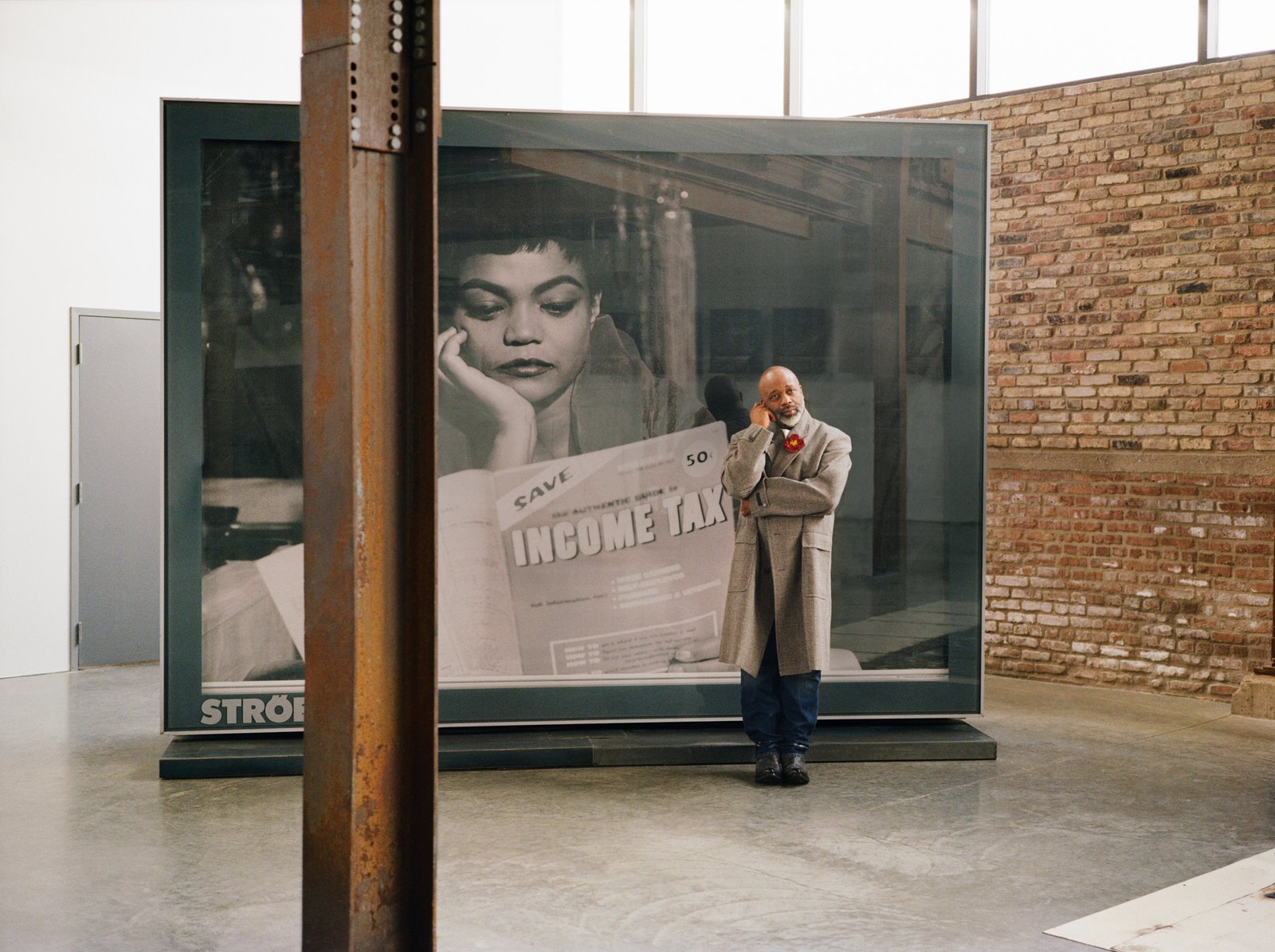
Coat, t-shirt, jeans, boots and brooch PRADA.
The photograph is among the many works housed in the studio of Theaster Gates, a conceptual artist, theorist, and urbanist committed to resculpting neglected Black enclaves within the Rust Belt. “Eartha Kitt is always there,” Gates explains when we speak. In his interpolation, a sign for Rothschild Liquor (a Chicago establishment bearing no relation to the dynastic Rothschild family) hangs above the snapshot of Kitt, blown up to subway ad proportions. The chanteuse is brought down to earth, to a South Side where her dissident howl at the racial order might find an accompanying orchestra. Gates is also a committed preservationist of Black and American visual histories. Risible that he is taken by Black eccentrics, the instructive glamour of the nonpareil. “I spend most of my time dreaming, managing, making.” He has an easy, forthcoming manner and, as noted in a New Yorker profile, several “voices,” vaulting from fey, shrewd artiste to raspy and avuncular, a midwestern geniality suffused with swagger.
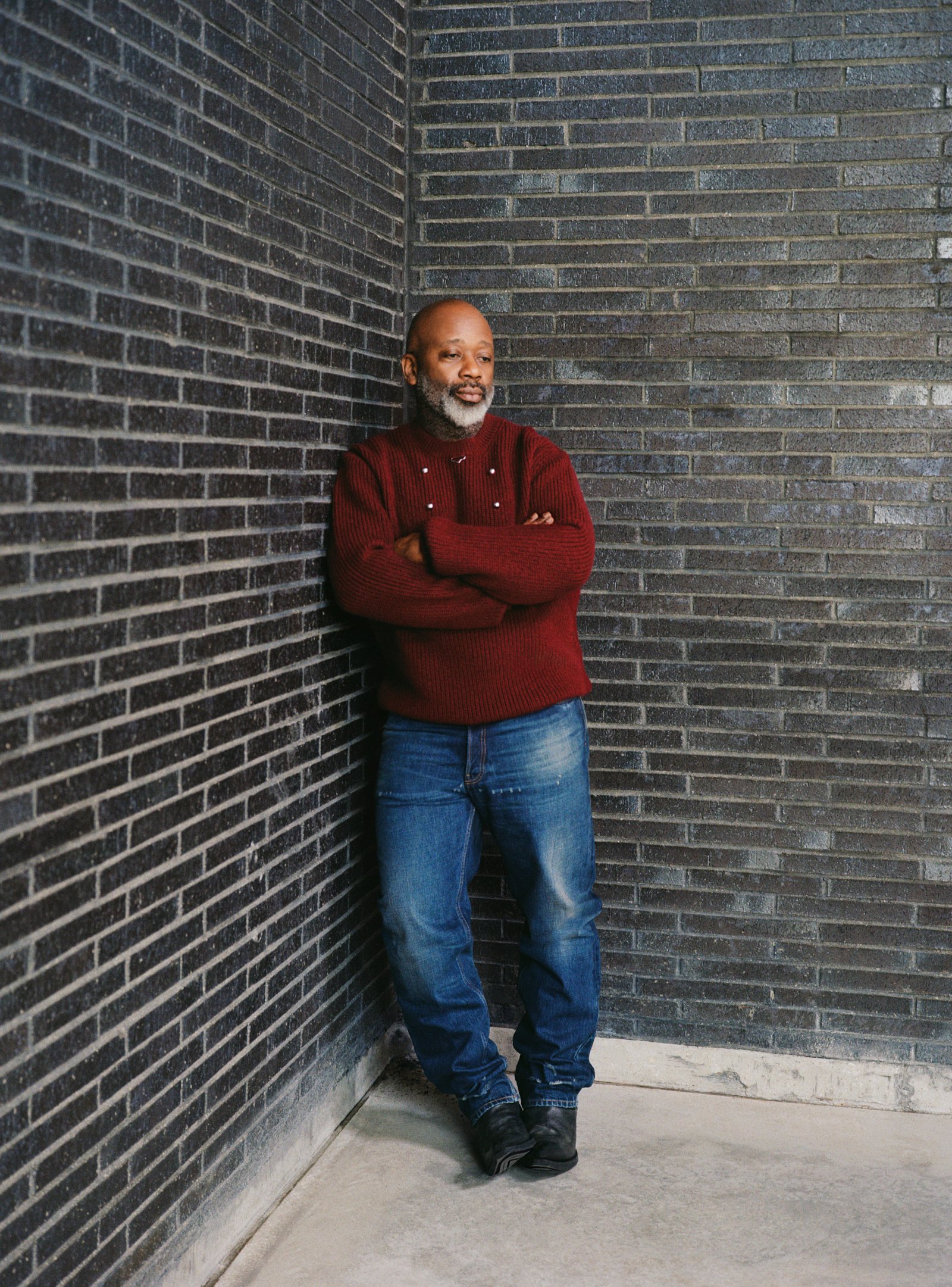
Sweater, jeans and boots PRADA.
His multidisciplinary methodology encompasses performance art, public restoration, civic engagement, and sculpture. Instead of a limitation, each form becomes a portal leading to another, wedding the architect’s pragmatism and the dreamer’s audacity. In what he has termed “social practice installation art,” panels of decommissioned fire hoses become commentary on the 1960s Black uprisings. Discarded wood becomes the scaffolding of an arts incubator.
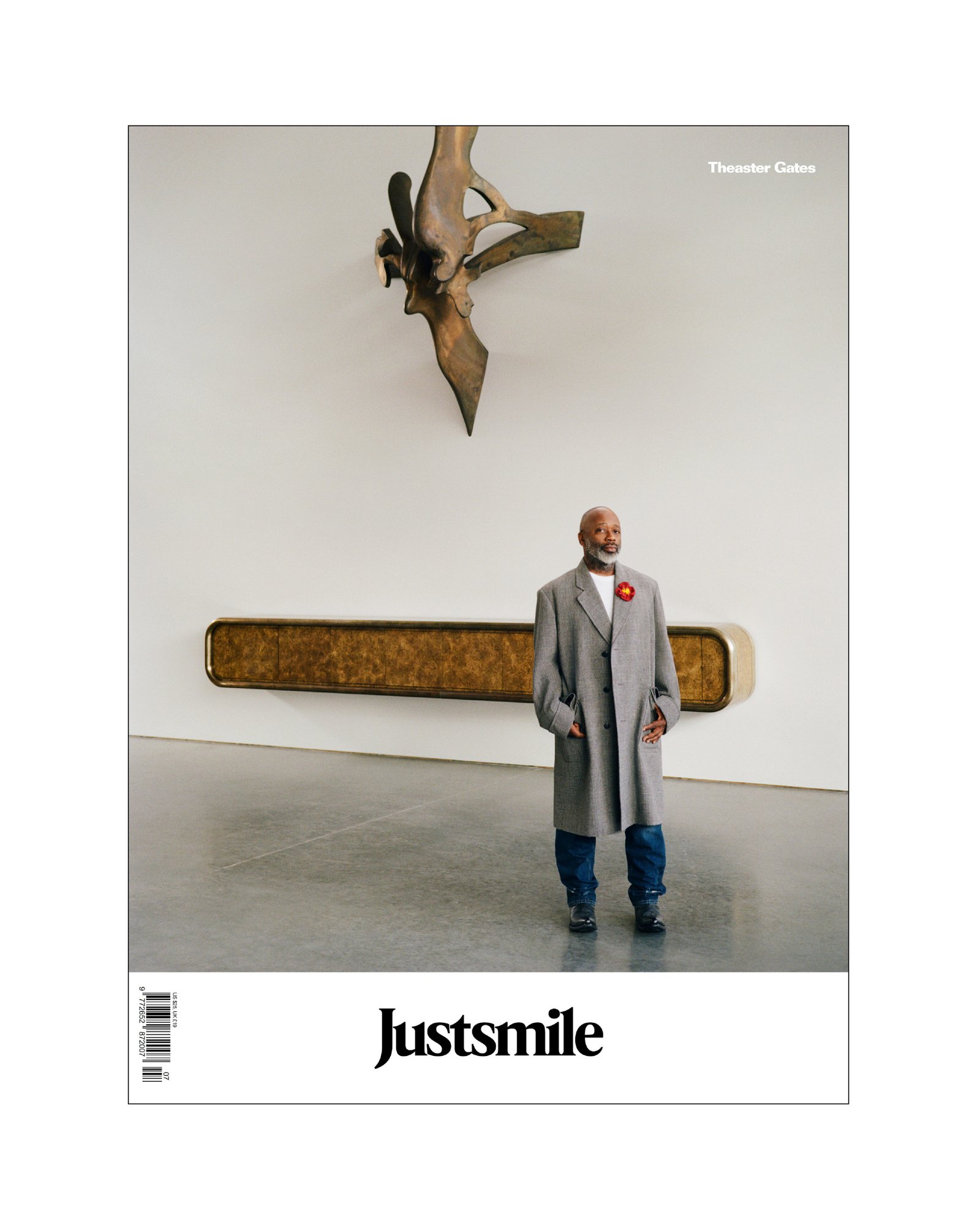
Justsmile Issue 7 cover featuring Theaster Gates. Coat, t-shirt, jeans, boots and brooch PRADA.
Read the rest of the story in Justsmile Issue 7, available to order here.